


Product ID: 737
Earn 13 points for this product. Log in or Sign up
120 Capsules
2-a-day
2 Month Supply
- Rest & Recharge: High-absorption magnesium bisglycinate to help reduce tiredness, ease muscle tension and support relaxation for a more restorative night.
- Gentle & Highly Absorbable: 300mg elemental magnesium in a glycinate form that’s easy on the stomach and easily absorbed
- Natural Nightly Calm: Non-habit forming formula that supports your nervous system and psychological function
Free delivery on United Kingdom orders over £20.
This item is in stock and will be dispatched in 1-2 days.
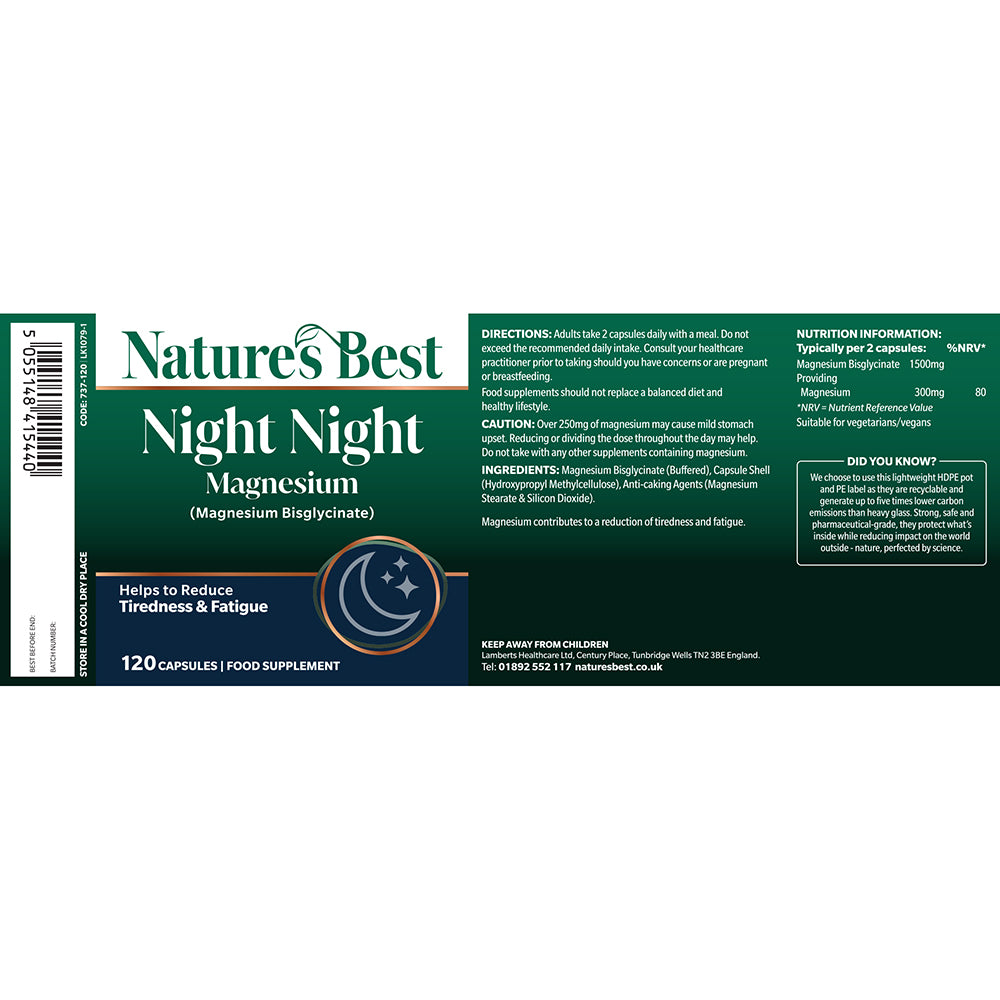
Night Night Magnesium delivers 300mg of elemental magnesium bisglycinate a day. We use a chelated form studied for superior absorption to support sleep and muscle relaxation.
| Typically per 2 capsules | |
| Magnesium (as Bisglycinate) | 300mg |


What it supports
Rest & Relaxation
Reduces Tiredness & Fatigue
Muscle Relaxation
Nervous System
Psychological Function

Free Nutrition Advice from our experts in 3 steps
-

Contact our team!
Free, confidential advice via email, telephone, live chat or letter.
We are available 9-5pm, Monday to Friday. -

Receive your personalised supplement advice
Tailored to your needs, our team provides science backed guidance.
-

Begin your health journey
With your personalised regime and guidance in hand, you have the support you need to make real, lasting changes.
Magnesium bisglcyinate is another one of our favourite forms of magneisum because of its excellent absorption and gentle effect on the stomach. It is also an ideal choice for those looking to take magnesium to help support with a restful night.EXPERT NUTRITION TEAM

-

-

Magnesium: Your Secret Weapon Against Sleep Sabotage During Seasonal Clock Changes
Read article -

Magnesium and Sleep: The Mineral Your Bedtime Routine Has Been Missing
Read article -

Why Can’t I Sleep? Steps to Help You Drift off Naturally
Read article


FAQs
Frequently asked questions
Magnesium is generally a better first option than valerian root for natural sleep support, particularly if magnesium intake is low. There is strong research that magnesium may support sleep quality, while evidence for valerian is inconsistent.
Magnesium has stronger nutritional evidence and a more established safety profile than CBD for supporting sleep. Some research suggests magnesium may modestly improve sleep, while evidence that CBD supports sleep remains limited. CBD can also interact with medicines, so it is not usually the first natural sleep supplement to consider.
Magnesium may support relaxation, particularly when dietary intake is inadequate. For persistent racing thoughts, however, we recommend contacting your healthcare provider as they can direct you to practices and resources that can help manage anxiety.
Magnesium may support sleep quality, but repeated waking can be caused by stress, menopause, alcohol, caffeine or other conditions. Please contact your healthcare provider to help treating the underlying cause for persistent broken sleep.
Perimenopause can cause broken sleep through hormonal changes, night sweats, hot flushes, anxiety and mood changes. Natural support can include regular exercise, a cool bedroom, stress-management techniques, consistent sleep times and relaxation practices like breath work and yoga. Magnesium may be considered as nutritional support, but persistent menopause-related sleep problems should be discussed with a healthcare professional.
Magnesium and melatonin have different roles, but neither is the best long-term treatment for chronic sleep problems. Magnesium may provide sleep support, particularly when intake is low, while melatonin is a prescription-only medicine rather than an over-the-counter supplement.
A consistent bedtime routine and relaxation techniques are among the most effective ways to reduce night-time anxiety and make falling asleep easier. Slow breathing, progressive muscle relaxation and writing down worries before bed can also help reduce mental arousal. Magnesium may provide additional support for some people.
The best evidence-based way to improve sleep without relying on medication is consistent sleep habits. Keep a regular wake time, exercise during the day, limit caffeine and alcohol, and use relaxation techniques before bed. Natural supplements such as magnesium may complement these measures.
Magnesium bisglycinate (magnesium glycinate) is a good choice for a nightly routine because recent research suggests it may support sleep.
A consistent sleep schedule, relaxation techniques, exercise and addressing the underlying source of stress can further improve long-term sleep quality. Magnesium supplements may compliment these practices to support sleep and relaxation.